Introduction
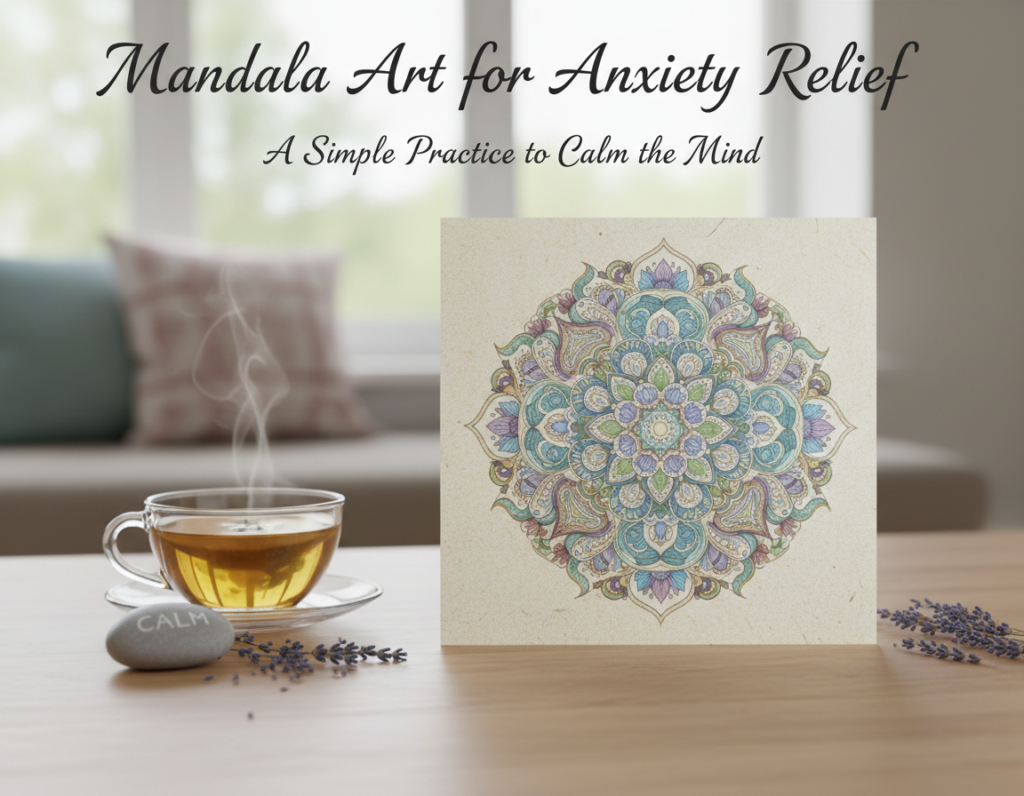
Anxiety has become a common experience for many people today. Busy schedules, constant thinking, and emotional pressure can make the mind feel restless and overwhelmed. While there are many ways to manage anxiety, creative practices can offer a gentle and natural path toward calmness. Did you know that Art i one among them and above all these days Mandala is the most meditative art form.
Mandala art for anxiety relief is one such practice that has helped many people slow down their thoughts and reconnect with a sense of inner balance. The process of drawing repeating patterns inside a circle can relax the mind and create a peaceful focus.
Mandala drawing does not require special artistic skills. Anyone can begin with simple shapes and patterns. The beauty of mandala art lies in the process itself rather than the final design. Enjoy every part that leads to calming your nerves, and mind.
In this article you will learn how mandala art helps with anxiety relief, why the practice works for emotional balance, and how beginners can start a simple mandala drawing practice. You can simply follow the step with ease and there is no right or wrong here.
Understanding Mandala Art
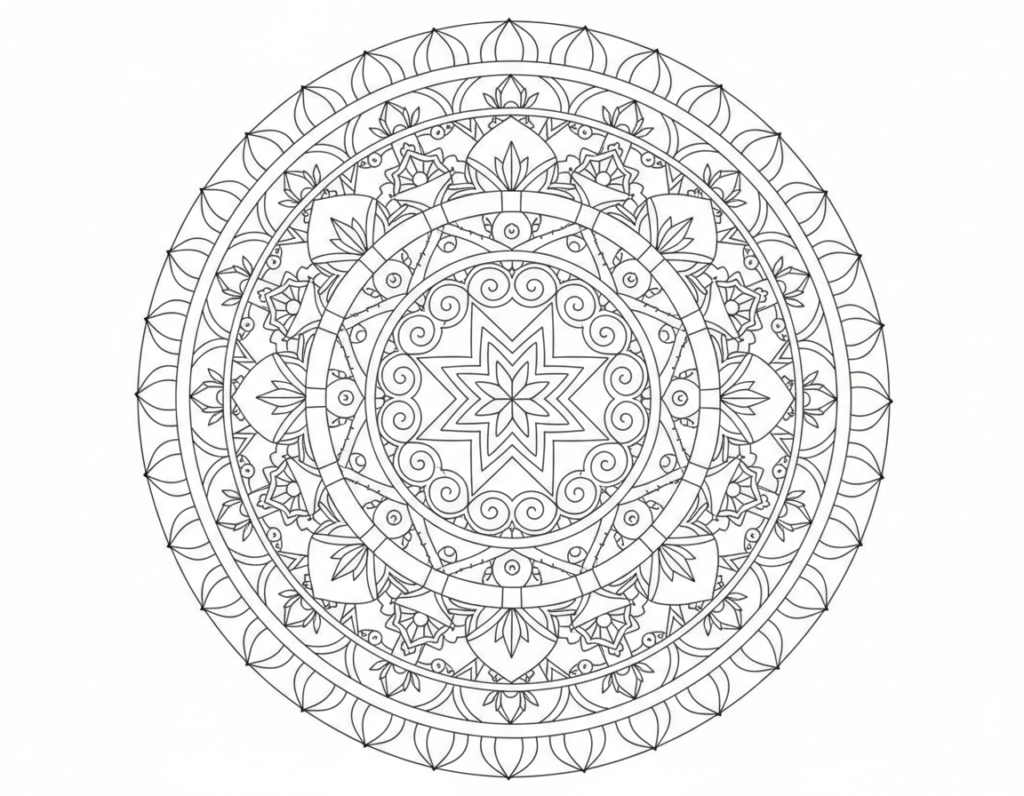
The word mandala comes from an ancient Sanskrit word that means circle or sacred center. Mandalas are circular designs created with repeating shapes and patterns. For centuries mandalas have been used in spiritual traditions as symbols of harmony, balance, and unity.
Today mandala art has become popular as a relaxing creative activity. Many therapists and wellness practitioners use mandala drawing as a mindful art practice for emotional well being.
The circular structure of a mandala encourages focus and balance. When the mind concentrates on drawing patterns within the circle, it naturally moves away from racing thoughts.
This is why many people find mandala art helpful for anxiety relief.
Why Mandala Art Helps Reduce Anxiety
Mandala art for anxiety relief works because it combines creativity with mindfulness. The process gently brings attention to the present moment. When someone draws a mandala, the mind focuses on small repeated patterns. This repetition can calm the nervous system and reduce mental tension.
Here are a few reasons why mandala drawing helps reduce anxiety.
Focus and concentration –
An anxious mind often jumps from one thought to another. Mandala drawing requires attention to small details. This focused attention helps the mind slow down and become more stable.
Mindfulness through creativity –
Mandala drawing is a form of mindful art. As you draw shapes and patterns, your attention remains on the present moment. This reduces the habit of worrying about the past or future
Repetitive patterns calm the brain –
The repeating shapes inside a mandala create a rhythmic drawing process. This repetition can relax the mind and bring a sense of order.
Creative emotional expression
Sometimes emotions are difficult to explain in words. Art allows feelings to be expressed naturally through shapes and colors.
The combination of focus, creativity, and repetition makes mandala art a powerful tool for anxiety relief.
Mandala Art as a Mindful Practice
Mindfulness means being aware of the present moment without judgment. Many mindfulness practices involve breathing exercises or meditation.
Mandala art offers another simple way to practice mindfulness. Instead of focusing only on breathing, the attention moves toward drawing patterns.
As the hand moves slowly across the paper, the mind follows the rhythm of the drawing. This process can create a calm mental state similar to meditation.
People who find traditional meditation difficult often enjoy mandala drawing because the hands remain active in a creative process.
A Simple Mandala Drawing Practice for Anxiety Relief
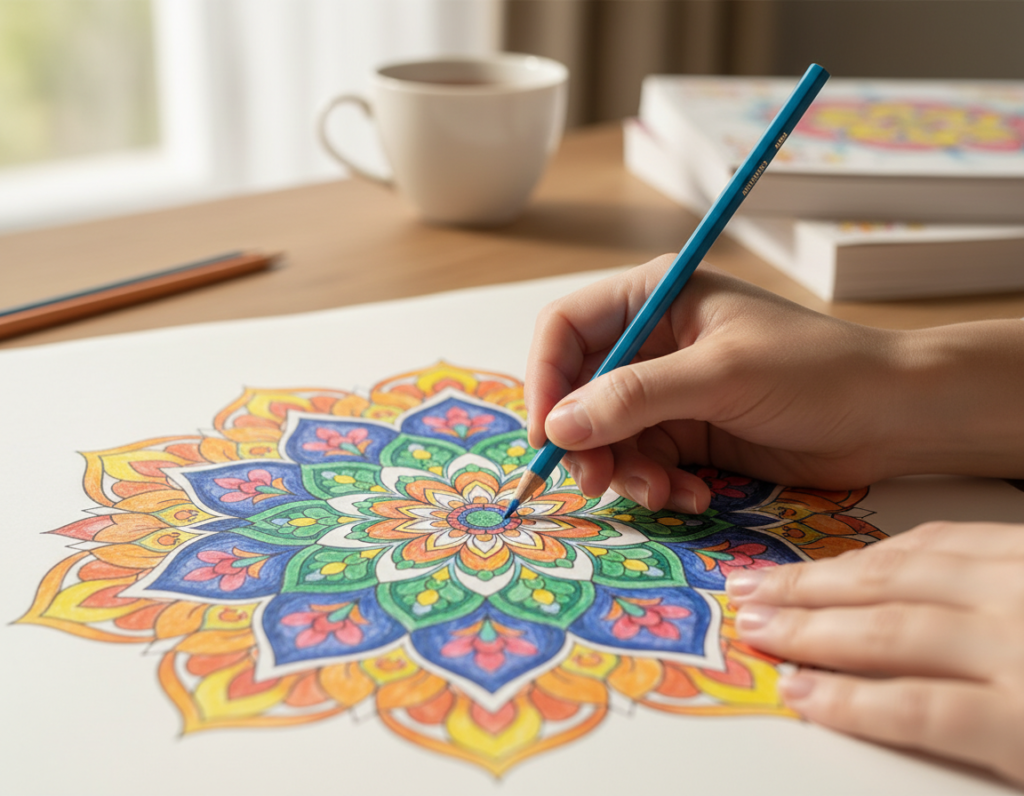
Starting mandala art for anxiety relief is very simple. You only need a few basic materials and a quiet space.
Materials needed
Plain drawing paper
Pencil
Black pen or fineliner
Compass or round object
Colored pencils if you want to add color
Step one draw a circle
Begin by drawing a circle on your paper. You can use a compass or trace around a round object like a bowl or plate
The circle becomes the foundation of your mandala.
Step two divide the circle
Use light pencil lines to divide the circle into equal sections. This helps create balance in your design.
Step three start drawing simple patterns
Begin drawing small shapes from the center of the circle. You can draw dots, petals, curved lines, or triangles.
Do not worry about making the design perfect.
Step four repeat the pattern
Continue repeating the same pattern around the circle. This repetition creates the mandala effect.
Step five add more layers
Slowly move outward from the center and add new patterns in each ring.
Step six add color if you wish
You can leave your mandala in black ink or add colors that feel calming to you.
Blue and green colors are often associated with relaxation and balance.
The goal of this practice is not perfection. The goal is to relax and enjoy the drawing process.
Tips for Beginners Practicing Mandala Art for Anxiety
If you are new to mandala art, these simple tips can make the experience more enjoyable.
Keep the patterns simple. Complex designs are not necessary.
Focus on the rhythm of drawing rather than the final result.
Draw slowly and allow the process to be relaxing.
Choose colors that feel peaceful to you.
Set aside a small amount of time each day to practice.
Even ten minutes of mandala drawing can help create a sense of calm.
Creating a Daily Mandala Practice
Many people find that a daily mandala practice helps improve emotional balance.
You can choose a quiet time during the day when you feel relaxed. Some people enjoy drawing mandalas in the morning to begin the day with clarity. Others prefer drawing in the evening to release stress from the day.
Consistency is more important than the amount of time you spend.
A simple daily practice could look like this.
Take three slow breaths before you begin drawing.
Draw a small mandala pattern for ten or fifteen minutes.
Focus only on the shapes forming on the paper.
Notice how your mind feels after the practice.
Over time mandala drawing can become a peaceful ritual that supports emotional well being.
Mandala Art and Emotional Healing
Mandala art is often used in art therapy because it allows people to express emotions visually.
The circular design symbolizes wholeness and balance. When people create mandalas they often feel a sense of harmony and inner calm.
Mandala art can also help people become more aware of their emotions. The colors and patterns chosen during the drawing process may reflect feelings that are difficult to express verbally.
For this reason mandala art is sometimes used in emotional healing practices.
Final Thoughts on Mandala Art for Anxiety Relief
Mandala art for anxiety relief is a simple and accessible practice that anyone can try. You do not need professional art skills or expensive materials.
The act of drawing patterns inside a circle can slow down the mind and create a calming rhythm.
Through focus, repetition, and creativity, mandala drawing becomes a gentle form of mindfulness. With regular practice it can support relaxation, emotional balance, and self awareness.
In a busy world where stress and anxiety are common, small creative practices like mandala art remind us to pause and reconnect with ourselves.
If you would like to explore mandala art for emotional balance in a guided experience, you can learn more about the Bloom Within Mandala Workshop available on this website.
“I discovered that drawing mandalas helps slow down my thoughts and brings a sense of calm.”
“If you would like to explore mandala art for emotional balance in a guided experience, visit the Bloom Within Mandala Workshop on this website.”
You can Read this blog